
Planting Your Christmas Tree Outside After the Holidays
For many families, choosing the perfect Christmas tree is a cherished part of the holiday tradition. The fragrance of fresh pine, the twinkling lights, and the festive decorations all bring warmth into the home during the winter season. But once the holidays are over and the ornaments come down, the tree often ends up on the curb waiting for disposal. What many people don’t realize is that with the right preparation, you can give your tree a second life by planting it outdoors.
Planting your Christmas tree outside is not only a rewarding and eco-friendly option but also a meaningful way to mark each year with lasting beauty. Imagine watching a tree grow year after year. A living memory of holidays past. Let’s walk through everything you need to know to successfully plant your Christmas tree outdoors after the festivities are over.
Why Plant Your Christmas Tree Outside?
1. It’s Better for the Environment
Discarded Christmas trees often end up in landfills, where they release methane as they break down. Planting your tree instead helps reduce waste and contributes positively to the ecosystem. Trees absorb carbon dioxide, create oxygen, and support wildlife, all of which make them a terrific environmental investment.
2. It Creates a Living Tradition
Planting a tree outdoors can become a beautiful yearly ritual. Families often enjoy tracking the growth of their “Christmas trees past,” watching them transform from holiday décor into towering reminders of shared memories.
3. It Adds Beauty to Your Landscape
Trees add structure, shade, privacy, and seasonal interest to your yard. A Christmas tree that grows successfully can become an anchor point in your garden or even serve as part of a windbreak or natural fence line.
4. It’s Fun and Educational
This is especially true for children—planting and nurturing a tree teaches responsibility, stewardship, and an appreciation for nature.
Important Note: Not All Christmas Trees Can Be Planted
Before you get too excited, one crucial detail must be mentioned: only living, root-ball or potted Christmas trees can be successfully planted after the holidays.
Cut trees—those sold with the trunk sawn off—cannot be replanted because they no longer have roots. If your intention is to plant the tree outdoors, you need to purchase:
A living tree with an intact root ball wrapped in burlap
orA potted living Christmas tree
These trees tend to be smaller and heavier but are designed for planting after Christmas.
If you do not yet have your tree, and planting is part of your plan, keep this in mind while shopping for one.
Before Christmas: Preparing Your Tree for Success
A successful transplant starts long before the tree enters your home. Here’s how to prepare:
Choose the Right Species
Some Christmas tree species transplant more successfully than others and tolerate winter planting better. Popular and hardy options include:
Norway spruce
Blue spruce
White spruce
Douglas fir
Fraser fir
White pine
Talk to local nurseries to see which varieties grow best in your area.
Make Sure the Root Ball is Healthy
Whether you buy a potted tree or one in burlap, the root ball must be large, solid, and moist. If the tree seems loose in the root ball, or the soil is dry and crumbling, choose another one.
Prepare the Planting Site in Advance
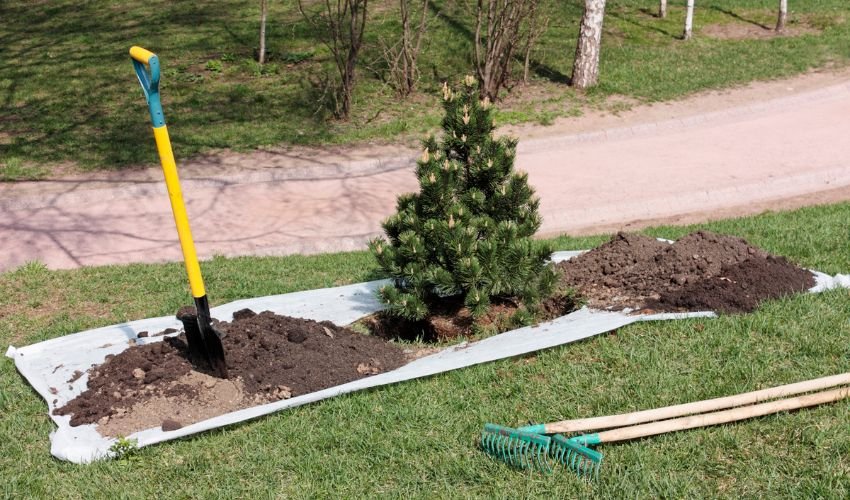
Because the ground may be frozen in late December or early January, dig the hole before winter deepens—ideally early to mid-December. This gives you a ready-to-use planting hole later.
Your hole should be:
At least twice as wide as the root ball
No deeper than the height of the root ball (to avoid settling and rot)
Located in a well-draining spot with access to sunlight
During Christmas: Caring for the Tree Indoors
A living Christmas tree can only be indoors for a short period—ideally no more than 7–10 days. The warm indoor air can wake the tree from dormancy, making it less able to withstand the cold once replanted outside.
Here’s how to keep it healthy indoors:
Keep the Tree Away from Heat Sources
Avoid placing the tree near:
Radiators
Fireplaces
Vents
Space heaters
Heat dries out needles and stresses the tree.
Water Lightly—but Consistently
The root ball must stay moist, but the soil shouldn’t be waterlogged. For a burlapped root ball, place it in a wide container or tub to catch excess water.
Avoid Heavy Decorations
A living tree is more delicate than a cut one. Avoid:
Heavy ornaments
Hot incandescent lights (LEDs are safer)
Tinsel that could get caught in branches
Acclimate the Tree Before Moving It Outdoors
When you’re ready to plant it outside, don’t move it directly from warm indoor air to freezing temperatures. Instead:
Place it in a garage, enclosed porch, or shed for 2–3 days.
This gradual shift helps the tree adjust and reduces shock.
After Christmas: Planting Your Tree Outdoors
Now comes the exciting part—giving your Christmas tree a permanent home.
Step 1: Remove the Insulating Material from the Planting Hole
If you filled the hole with leaves or mulch, clear it out to reveal the unfrozen soil beneath.
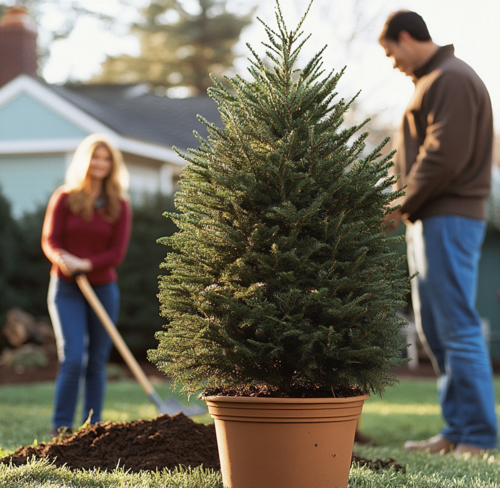
Step 2: Place the Tree in the Hole
Position the tree:
Straight and centered
With the top of the root ball level with or slightly above the ground
With burlap left in place if natural (it will decompose), or loosened/cut if synthetic.
Never bury the trunk deeper than it was in the pot.
Step 3: Backfill with Native Soil
Do not use potting mix or fertilizer in the hole. Fill around the root ball with the soil you removed earlier, firmly but gently tamping it down to eliminate air pockets.
Step 4: Water Thoroughly
Even in winter, water is crucial. Give the tree a slow, deep watering to help settle the soil and hydrate the roots.
Step 5: Mulch for Protection
Apply 2–4 inches of mulch around the base, leaving space around the trunk to prevent rot. Mulch protects roots from freeze-thaw cycles and helps maintain moisture.
Step 6: Stake if Necessary
If your location is windy or the tree is tall, you may need to stake it for the first year to keep it upright while the roots establish.
Winter Care After Planting
Even though the tree is hardy, it will still need support in its first winter.
Watering
On warmer winter days (above freezing), water the tree if the soil feels dry. Winter drought is a common reason transplanted trees fail.
Protection From Animals
Rabbits, deer, and rodents sometimes nibble on tender evergreen foliage and bark. Protect your tree by:
Wrapping the trunk with tree guards
Using a wire cage around the base
Applying animal repellents (if safe in your region)
Spring and Summer Care for a Newly Planted Christmas Tree
Once spring arrives, your tree will begin to grow new roots and shoots. Proper care now will determine whether it thrives long-term.
1. Regular Watering
During the first growing season, water the tree every 7–10 days, or more often during hot spells. Deep, slow watering encourages strong root development.
2. Light Feeding
Avoid fertilizing in the first few months, as this can stress recovering roots. By mid-spring or early summer, a gentle evergreen fertilizer can be applied if needed.
3. Mulching
Refresh the mulch throughout the year to retain moisture and prevent weeds. Keep mulch away from direct contact with the trunk.
4. Avoid Pruning
Do not prune newly transplanted evergreens. Let them spend their energy on root establishment.
Common Mistakes to Avoid
Keeping the Tree Inside Too Long
The biggest cause of failure is leaving a living Christmas tree indoors for weeks. When exposed to household warmth, the tree wakes up and loses its cold hardiness.
Planting in a Frozen Ground
If you did not prepare the hole in advance, you may struggle to dig in January. Frozen soil is almost impossible to work with, and trees planted in poorly dug holes may not establish properly.
Choosing the Wrong Location
Evergreens need light and space. Planting your tree too close to buildings, fences, or other trees can lead to long-term issues.
Over- or Underwatering
Both extremes are harmful. Keep the soil moist but never swampy.
What to Expect Over the Years
Once established, your former Christmas tree will grow steadily—some species up to one foot per year or more. Watching it take root in your landscape can be incredibly rewarding.
Imagine:
Decorating it with outdoor lights next year
Taking yearly photos beside it as it grows
Turning your yard into a forest of holiday memories
A planted Christmas tree is more than just part of your landscaping—it becomes part of your family story.
Sustainable Alternatives if You Can’t Plant the Tree
If you don’t have space for planting, here are eco-friendly alternatives:
1. Rent a Living Christmas Tree
Many areas now offer tree rental services where trees are delivered to your home in pots and then returned after the holidays to be replanted.
2. Join a Community Planting Program
Some cities accept living Christmas trees for replanting in parks or restoration areas.
3. Use a Potted Tree Indoors Year After Year
Some families keep a smaller potted evergreen on a patio year-round and bring it inside during the holidays.
Planting Your Christmas Tree Is a Gift to the Future
In a world increasingly focused on sustainability, planting your Christmas tree is a simple but impactful gesture. It's a way of returning something to the earth, contributing to wildlife habitat, and reducing holiday waste. More importantly, it creates a living reminder of the joy your family shared during the holiday season.
Every time you see that tree thriving in your yard, you’ll be reminded of where it came from—a special Christmas moment that now continues to grow year after year.
